
ELM Systems Integration: What Needs to Connect
ELM systems integration determines if your legal platform is a system of record. What enterprise systems it must connect to, and how to evaluate each connection.
ELM Implementation: What It Actually Requires for Success
ELM implementation spans data migration, integrations, billing rules, and change management. A practitioner's guide to what your rollout requires.
Legal Technology Change Management: Why It Matters
Legal technology change management is what makes new systems stick. Learn why CLM, ELM, and AI rollouts succeed or stall, and how to lead the change.

What Is Legal Tracker? A Practitioner’s View
A practitioner's view of Thomson Reuters Legal Tracker: what it does, who uses it, where it is strong, and where corporate legal departments outgrow it.

Legal Bill Review: What It Is and What It Catches
Legal bill review helps in-house legal teams audit outside counsel invoices for billing compliance, rate accuracy, and budget discipline. This guide explains the three layers of bill review and how they fit into eBilling governance.

Outside Counsel Billing Guidelines: What to Include
Outside counsel billing guidelines define how law firms invoice legal departments. This guide explains what they should include, how to enforce them, and why they matter.
Onit eBilling Implementation: What It Takes
Implementing Onit eBilling is one of the highest-ROI legal technology investments a legal department can make. This guide covers what implementation requires, what goes wrong, and what results are achievable.

How Does Legal eBilling Work? A Complete Guide
Legal eBilling helps in-house legal teams manage outside counsel invoices through automation, billing rules, and structured data. This guide explains how it works and what successful implementation requires.
ELM Data Migration: How Legal Departments Should Approach It
ELM data migrations are the key to an AI ready department. Bob Frostad on the Shift Left discipline, the Alpha/Delta two-pass method, and the four aspects every migration must get right.

What Is Legal Operations Consulting?
What legal operations consulting covers, when to bring in a consultant, and how to evaluate firms, from practitioners who have delivered $60M in savings.
In-House Legal Software: What Do You Actually Need?
What software does a corporate legal department actually need? This guide covers the in-house legal software stack, ELM, CLM, matter management, eBilling, workflow automation, and how to build it without overcomplicating.
What Is a Legal Operations Platform?
A legal operations platform is the integrated technology system that runs a modern in-house legal function. This guide covers what it does, what to evaluate, and what the leading options deliver.
Legal Matter Management Software: How to Choose
Legal matter management software is the operational core of any ELM deployment. This guide covers what to evaluate, the questions to ask vendors, and what a successful implementation actually requires.
ELM vs CLM: What Is the Difference?
ELM and CLM are frequently confused and sometimes sold as the same thing. This guide explains the real difference, where the platforms overlap, and how to decide what your legal department actually needs.
ELM Software: Buyer’s Guide for Legal Departments
Comparing ELM software? This guide covers the leading platforms, Onit, Mitratech, Thomson Reuters, and Wolters Kluwer, with evaluation criteria and what buyers consistently underestimate about implementation.
What Is Matter Management in Legal?
Matter management is how in-house legal departments track, budget, and report on every piece of legal work. This guide explains what it is, what good looks like, and how it fits into an ELM platform.
What Is Enterprise Legal Management (ELM)?
Enterprise legal management (ELM) is how legal departments manage matters, billing, and operations at scale. This plain-English guide explains what ELM is and what it covers.

Onit ELM: When It’s the Right Choice (and When It Isn’t)
A practitioner's honest view of why Onit ELM is the right choice for legal departments, based on delivery experience across Onit and other competing ELM platforms.

Onit Implementation Partner: How to Evaluate One
Not all Onit implementation partners are equal. This guide covers the criteria that separate strong partners from weak ones, and the questions worth asking before you decide.
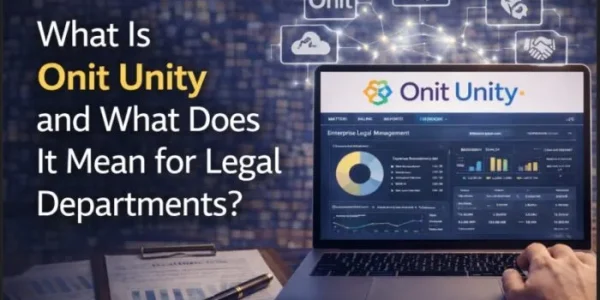
What Is Onit Unity? The Next-Generation ELM Platform
Onit Unity is Onit's next-generation ELM platform, AI-first combines features from OnitX and SimpleLegal into a unified architecture. This guide explains what Unity is and what it means for legal departments.

What Is Onit Apptitude? Low-Code Legal Workflow Platform
Onit Apptitude is Onit's low-code workflow platform. This guide explains what it does, how it extends Onit ELM, and what legal ops teams can build with speed and without waiting months to ideate.
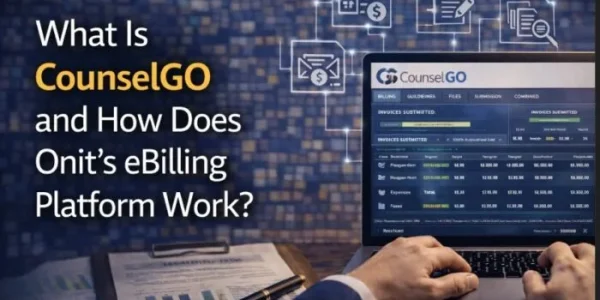
What Is CounselGO? Onit’s eBilling Platform Explained
CounselGO is Onit's eBilling intake portal for SimpleLegal users. This guide explains how CounselGO works, how it enforces billing guidelines, and what implementation requires.

What Is SimpleLegal? Onit’s Mid-Market ELM Platform
SimpleLegal is Onit's mid-market ELM platform designed for legal teams that need matter management and eBilling without full enterprise complexity.
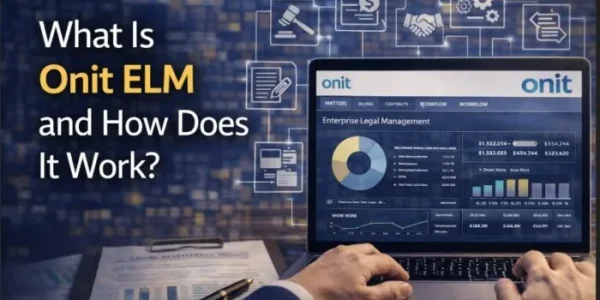
What Is Onit ELM and How Does It Work?
Onit ELM covers matter management, eBilling, CLM, and workflow automation. This guide explains what the Onit ELM platform does and what a successful implementation requires.

Enterprise Legal Management (ELM) Software: What It Is, How It Works, and How to Choose the Right System
A complete guide to enterprise legal management software for in-house legal teams. Covers ELM features, benefits, how ELM compares to CLM, and how to evaluate the right system for your legal department.
Why eBilling Tools Alone Aren’t Enough
Understand why eBilling tools alone are not enough to control legal spend. Discover how better governance and processes improve cost control.
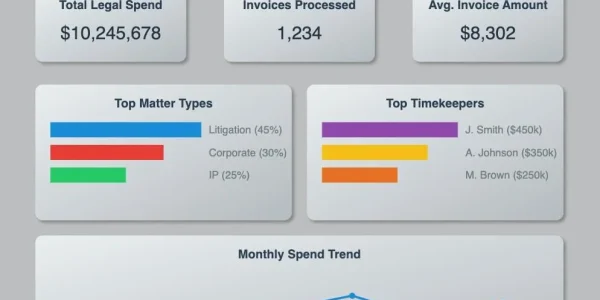
How LEDES Format Enhances Legal Billing Metrics & Analytics
Discover how the LEDES format improves legal billing accuracy and analytics. Learn how standardised data enables better reporting, benchmarking, and decision-making.
How Does the LEDES Billing Format Transform Legal Invoicing
Learn how the LEDES billing format transforms legal invoicing by improving accuracy, consistency, and efficiency in managing legal billing processes.

Automate Legal Service Requests to Modernize Your Department
By streamlining workflows, improving efficiency, and empowering your team, automation can transform the way your legal department operates.
Transform Legal Operations: Matter Management within ELM Systems
Discover how matter management within ELM systems transforms legal operations. Learn how better processes improve visibility, productivity, and control.