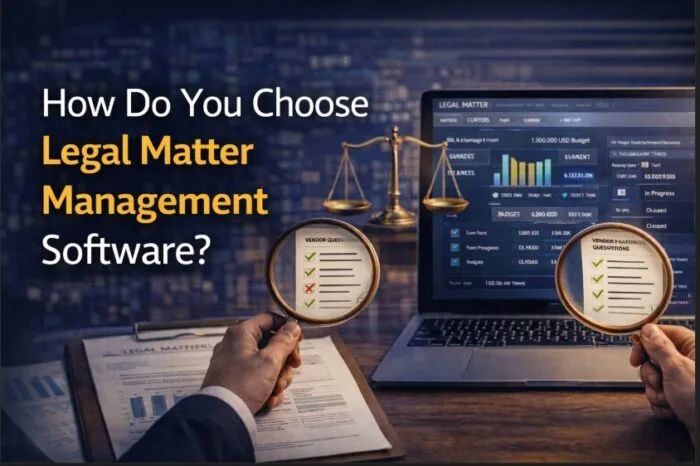

Legal matter management software allows in-house legal departments to track every active matter in a single system, including budgets, timelines, workload, outside counsel assignments, and status reporting. It is typically the first module deployed in an ELM program and the foundation on which eBilling, spend analytics, and reporting are built. For foundational context on the matter management category, see what is matter management.
Legal matter management software: market overview
The table below provides a reference-level overview of platforms that appear in matter management and ELM evaluations. It is organized by category rather than ranking.
This list is non-exhaustive and provided for general orientation only. The legal technology market moves quickly, particularly as AI capabilities evolve across platforms. Product features, ownership, and market positioning change regularly. Verify current capabilities directly with vendors before making any purchasing decision. If you want an independent view on fit for your specific legal department, contact Swiftwater.
| Platform | Category | Best For | Core Strength | Watch-outs |
| Ascent ELM | Enterprise and compliance | Risk-heavy environments | Governance and compliance workflows | New ownership |
| Brightflag | AI and spend-led | CFO-aligned legal teams | AI invoice review and matter visibility | “Young application” per G2 reviewers, growing and improving |
| BusyLamp | Enterprise spend and matter | EU and global enterprises | Strong analytics and budgeting | Specialized implementation |
| Checkbox | Intake and workflow-first | Legal teams fixing intake chaos | No-code workflows, fast deployment | Needs integration for full ELM stack |
| CounselLink | Spend-heavy ELM | Legal and finance alignment | Strong reporting and benchmarking | Configurable but not customizable |
| Docket | Intake-first | Smaller and modern teams | Simple intake and tracking | Not full matter management |
| iManage | Document management (adjacent) | Document-heavy legal teams | Industry-standard DMS and knowledge management | Not matter management, needs integration |
| Knovos Manage | Litigation-heavy | Investigations and disputes | Strong document and case handling | Less business-facing UX |
| Lawcadia | Intake and vendor management | Procurement-heavy organizations | Intake, panel management, and matters | Smaller ecosystem |
| LawVu | Modern all-in-one | Mid to large in-house teams | Unified workspace across matters, contracts, and spend | Up-and-coming, developing depth in traditional ELM in complex billing |
| NetDocuments | Document management (adjacent) | Cloud-first legal teams | Secure cloud-native DMS | Not matter management, needs integration |
| Onit OnitX | Enterprise ELM | Fortune 500 | Deep configurability across matters, billing, and workflows | Flexibility can lead to over-engineering |
| Onit Unity | Converged ELM | Enterprises wanting balance of power and usability | Best of both worlds across configuration and UX | Still evolving as a unified platform |
| ServiceNow Legal Service Delivery | Enterprise workflow platform | IT-integrated organizations | Unified enterprise workflows | Requires IT ownership, legal footprint limited, dependence on IT |
| SimpleLegal (see alternatives) | Mid-market ELM | Growing legal operations teams | Pre-built, clean UX across spend and matters | Pre-built, less configurable than Tier 1 enterprise platforms |
| TeamConnect | Enterprise ELM | Fortune 500 | Extremely deep customization | Java-based development model |
| TyMetrix 360 | Enterprise ELM | Global legal departments | Mature eBilling and matter management | Wolters Kluwer now has two products serving overlapping markets, TyMetrix & Brightflag, which one gets more roadmap resources? |
What should legal matter management software do?
Legal matter management software is not a glorified task tracker. At its most basic, it organizes legal work into structured records. At its best, it becomes the operational infrastructure through which a legal department tracks what it is doing, what it is spending, and what outcomes it is generating.
The primary job of the software is to give every piece of legal work a home. A matter record should capture the matter type, ownership, status, key dates, budget, and outside counsel assignments. It should connect to the billing layer so that invoices are attributed to the correct matter. It should connect to the intake layer so that legal requests from the business automatically create matters rather than sitting in someone’s inbox. And it should feed the reporting layer so that legal leadership can see the full portfolio at any time without manually assembling data.
The software also needs to reflect how the legal department actually operates. Matter types vary significantly across functions. A litigation matter needs different fields from a contract matter, which needs different fields from a regulatory inquiry. A system that imposes one generic matter template across all work types produces records that are structurally incomplete, which means the data they generate is unreliable.
According to the Thomson Reuters Institute 2024 State of the Corporate Law Department, 72% of legal departments are focused on building efficient in-house workflows and optimizing external counsel engagements. Matter management software is the primary infrastructure for both.
Running an ELM or eBilling implementation?
Swiftwater has three Level 4 Onit-certified practitioners. If you are evaluating, implementing, or rescuing an ELM program, let us talk about what that actually takes.
See ELM ServicesFor broader context on how matter management fits into the full ELM stack, see what is enterprise legal management.
What are the most important capabilities to evaluate?
Feature lists for matter management software are long and largely similar across vendors. The capabilities that consistently separate high-performing deployments from underperforming ones are not always the most prominently marketed ones.
| Capability | What to Look For | Why It Matters |
| Matter type configurability | Can you create distinct matter templates with different fields per type? | Generic templates produce incomplete data |
| Intake and routing | Can requests from the business automatically create matter records? | Manual intake breaks the data chain |
| Budget and accrual tracking | Can matter-level budgets be set, tracked, and reported in real time? | Spend control requires matter-level visibility |
| Outside counsel assignment | Can firms and timekeepers be assigned to matters and connected to eBilling? | Disconnected billing data is uncontrollable |
| Workflow automation | Can matter status trigger downstream actions without manual intervention? | Automation requires structured matter data |
| Reporting and dashboards | Can leadership see portfolio status, spend, and risk without manual assembly? | Reporting is only as good as the data feeding it |
| Document and communication linking | Can documents and key communications be stored against the matter record? | Matter-centricity requires all data in one place |
| Integration | Can the system connect to finance, HR, and document management platforms? | Isolated matter data cannot inform enterprise decisions |
The capabilities at the top of this list, matter type configurability and intake automation, are worth more attention than they typically get in vendor demos. Demos tend to showcase reporting dashboards because they are visually compelling. The actual value of a reporting dashboard depends entirely on the quality of the matter data feeding it, which is a function of how well the intake and configuration layers are designed.
What questions should you ask vendors about matter management?
Vendor demos show the platform at its best. The questions worth asking are the ones that reveal how the platform behaves at the edges of your requirements, under the conditions that your legal department actually operates in.
On configurability: Can we create different matter templates with completely different field sets for litigation, employment, IP, and corporate matters? What is the process for adding or modifying matter types after go-live, and does it require vendor involvement or can our team handle it?
On intake: How do legal service requests from the business connect to matter creation? Is that connection automatic or does it require manual steps? For a practical view of how intake automation works in an ELM environment, see how to automate legal service requests.
On eBilling connection: How does a matter record connect to the eBilling layer? When an invoice is submitted by outside counsel, how is it attributed to the correct matter? What happens when an invoice arrives for a matter that does not yet exist in the system?
On reporting: What reporting is available out of the box versus what requires custom configuration? If we want a report that shows all open matters by practice area with budget status and outside counsel spend, is that a standard report or a custom build?
On data migration: How does the system handle migration of historical matter data from our existing system? What format does the data need to be in, and what support is provided for cleaning and structuring legacy data before import?
On user adoption: What does the system look like for a business user submitting a legal request versus an attorney managing a matter versus a legal operations manager running reports? Are those experiences distinct and optimized for each user type?
How does matter management software integrate with eBilling?
The integration between matter management and eBilling is one of the most consequential architectural decisions in an ELM deployment, and it is frequently underexamined during software evaluation.
The matter management layer defines what matters exist, who owns them, what their budgets are, which outside counsel firms are assigned to them, and what billing rules apply. The eBilling layer validates invoices against those definitions. When an invoice arrives from a law firm, it should be automatically checked against the matter it relates to: does the matter exist, is the submitting firm authorized on this matter, does the invoice comply with the billing guidelines attached to this matter, and does the charge fall within the approved budget?
When matter management and eBilling are properly integrated, this validation happens automatically at submission, before the invoice reaches the review queue. When they are poorly integrated or disconnected, invoices arrive without reliable matter attribution, budget tracking is manual and delayed, and billing guideline enforcement is inconsistent.
Want the review function run for you?
Every outside counsel invoice checked against your guidelines, rates, and matter context, inside the eBilling platform you already own, with the exception handling, vendor coaching, and savings reporting that separate a review program from invoice processing.
See Bill Review ServicesThe platforms that handle this best are the ones where matter management and eBilling are modules within the same system rather than separate products connected through an integration. Onit’s eBilling application and CounselGO intake portal connect to the OnitX and SimpleLegal matter management layer within a single environment. Mitratech’s TeamConnect (Collaborati portal) and Wolters Kluwer’s TyMetrix similarly integrate matter and spend data within their platform ecosystems. For a detailed breakdown of how the eBilling intake layer works in practice, see what is CounselGO.
According to the ACC Chief Legal Officers Survey, controlling outside counsel spend is a top operational priority for legal departments. That control is only achievable when the matter management and eBilling layers are connected tightly enough that spend is visible at the matter level in real time, not reconciled after the fact.
What does uncontrolled legal spend actually cost your department? The Legal Tech ROI Calculator helps legal departments model the savings from matter-level spend control and eBilling governance against current costs and the cost of doing nothing.
What does a matter management implementation involve?
Matter management implementation is frequently underscoped because the software appears straightforward. The configuration options are visible in a demo. The data migration seems manageable. The go-live timeline looks achievable. In practice, the complexity is in the details that the demo does not show.
System design is the first and most consequential workstream. This means defining matter types and their distinct field sets, designing intake workflows that reflect how the business submits requests, setting up budget structures that align with how legal reports to finance, and establishing the governance rules that determine how matters are created, assigned, and closed. Done well, this takes time and requires genuine input from the legal team. Done poorly, it produces a system where records are incomplete and users route around it.
Data migration covers the movement of historical matter data from existing systems into the new platform. The quality of this work depends heavily on the quality of the source data. Legacy matter data is almost always messier than anticipated: inconsistent matter types, missing fields, duplicate records, and attribution that does not match the new system’s structure. The time required to assess, clean, and transform that data before migration is the most common source of timeline overrun in matter management implementations.
Integration connects the matter management system to finance, HR, document management, e-signature, and procurement platforms where required. Each integration adds scoping, development, and testing time. The number and complexity of integrations should be established before implementation begins, not discovered during it.
Change management covers the behavioral change the system requires from the people using it. Many relegate it to just training but in reality it starts even prior the project from what is in it for me, what is in it for us, tone from the top, communications, and an adequate and ongoing plan for training. For matter management, this means attorneys and paralegals creating matter records rather than managing work in email, business users submitting requests through intake workflows rather than calling or messaging the legal team directly, and legal operations staff maintaining system hygiene rather than allowing the data quality to drift. According to the Wolters Kluwer 2026 Future Ready Lawyer Survey, 62% of legal professionals report saving between 6 and 20% of their work week through process automation. That level of efficiency gain only materializes when the system is adopted consistently, which requires a change management program that begins at the start of implementation rather than at go-live.
For a full view of what the ELM implementation lifecycle requires across all modules, see ELM implementation guide.
What does good adoption look like post-implementation?
Go-live is not the end of the implementation program. It is the point at which the real adoption work begins.
Good adoption at six months post-live looks like this: legal requests from the business are consistently entering the system through the intake workflow rather than arriving by email; matter records are being opened promptly and maintained with accurate status, budget, and outside counsel assignment; invoices are arriving against existing matters rather than creating exception queues; and legal leadership is using system-generated reports to manage the portfolio rather than asking for manual summaries.
Poor adoption at six months looks like this: attorneys maintain their own tracking spreadsheets alongside the system; business users call or email the legal team directly because the intake workflow is too cumbersome; matter records are created late or left incomplete; and reporting is still assembled manually because the data in the system is not trusted.
The difference between these outcomes is rarely the platform. It is the quality of the implementation program and the ongoing operational support model behind it. A matter management system needs sustained attention after go-live: matter type maintenance as legal operations evolve, data quality governance to catch and correct drift, user support that is close to the legal team rather than routed through a vendor helpdesk, and reporting optimization as leadership’s analytical needs develop.
This is where a managed services partner adds value that vendor support cannot. Swiftwater’s managed services practice provides legal departments with operational support across matter management, eBilling governance, and system administration, staffed by professionals who understand both the platform and how in-house legal functions operate day to day.
Bottom Line
Legal matter management software is the operational core of any ELM deployment. The platform choice matters, but it matters less than the quality of the configuration, the integrity of the data migration, and the adoption program that follows go-live.
Is your legal spend data telling you the full story?
We help legal departments build the analytics, rate governance, and reporting infrastructure to move from invoice processing to strategic spend management.
See Legal Spend ServicesThe legal departments that get the most from matter management software are the ones that invested in designing the system around how they actually operate, not around how the default configuration suggests they should operate.
The right matter management software gives legal leadership a live view of every matter, every budget, and every outside counsel relationship in the portfolio. The wrong configuration of even the right software gives them a system they stopped trusting six months after go-live.
Not sure which matter management platform fits your legal department’s complexity? Contact Swiftwater to talk through the options with a team that has configured matter management systems across all major ELM platforms.
If you are evaluating legal matter management software or planning an implementation, explore how Swiftwater’s legal technology implementation services approach matter management configuration from a practitioner-led perspective.
Frequently Asked Questions
What is legal matter management software?
Legal matter management software is a tool used by in-house legal departments to manage and track legal work, including matters, budgets, deadlines, outside counsel assignments, and status reporting. It is the foundation of an Enterprise Legal Management (ELM) system, often used to manage the legal department’s workflow and data integration.
What are the key features of legal matter management software?
Legal matter management software typically includes features like matter creation, assignment and tracking, document management, budget and spend tracking, matter-specific reporting, and integration with eBilling and other systems. These features help streamline legal operations and ensure compliance with established workflows and spend controls.
How does matter management software improve efficiency?
Matter management software improves efficiency by providing legal teams with a centralized platform to track all legal matters and related activities. Automation of processes like intake, routing, and tracking reduces manual effort and minimizes human error. Real-time reporting provides better visibility into legal operations, helping teams make informed decisions quickly.
How does matter management software help with legal spend management?
Matter management software connects spend data directly to matter records, enabling real-time tracking of legal costs and budgets. This integration helps legal teams enforce budget guidelines, prevent overspending, and identify opportunities for cost reduction. It also streamlines billing by ensuring that invoices are accurately attributed to the correct matters.
What role does data migration play in legal matter management?
Data migration is crucial in matter management software implementation. It involves transferring historical data, such as existing matter records and related documents, into the new system. Proper data migration ensures that the system is populated with accurate, complete, and reliable data, enabling the software to deliver actionable insights from day one.
What are the challenges of implementing matter management software?
The main challenges of implementing matter management software include data migration issues, configuring workflows to reflect the legal department’s operational processes, and user adoption. Ensuring that the system is configured correctly to meet the needs of the legal team, integrating with other enterprise systems, and securing buy-in from all users are key to a successful implementation.
How does matter management software integrate with eBilling?
Matter management software integrates with eBilling by linking matter records with billing information. This ensures that invoices from outside counsel are automatically linked to the correct matter, with billing rules and budget limits enforced. This integration eliminates manual data entry and improves the accuracy of financial reporting.
What is the role of matter management software in compliance and risk management?
Matter management software helps ensure compliance by capturing all relevant legal data, including deadlines, contract terms, and legal obligations. It tracks risk events and facilitates audits by providing complete and structured records of all legal matters, helping legal teams manage compliance and mitigate potential risks more effectively.
Disclaimer: This article is provided for educational and informational purposes only. Neither Swiftwater and Company nor the author provides legal advice. This content does not constitute professional legal, financial, or operational advice and should not be relied upon as such. Readers are encouraged to consult a qualified professional before making decisions based on the information provided. External links are included for reference only and reflect the views of their respective authors. Swiftwater and Company takes no responsibility for third-party content.