
Law Firm Value Adds: What to Negotiate Beyond Rates
Rates are just one lever. Discover the law firm value adds legal departments actually negotiate: secondments, AFA pilots, training, and data commitments.
How Do You Manage Off-Panel Legal Spend Leakage?
Off-panel legal spend leakage quietly undermines law firm panel programs. Where it comes from, how to measure it & control it.
How Do You Configure Law Firm Panels in Your eBilling System?
Learn how to configure panel programs in your eBilling system, from firm status fields and rate enforcement to matter routing and compliance reporting.
How Many Law Firms Should a Legal Department Use?
How many law firms should a legal department use? See what benchmarks show by department size, what drives panel bloat, and how to find your right number.
How Do You Onboard a Law Firm Onto Your Panel?
Experience-based guidance to onboarding a law firm onto your panel: guideline acceptance, rate loading, eBilling setup, and the checklist that prevents billing disputes.
What Is Panel Counsel?
Panel counsel are law firms pre-approved to handle an organization's legal work. Learn what the term means in corporate legal and insurance contexts.

How Do You Run Law Firm Business Reviews?
Learn how to run law firm business reviews that change behavior: cadence, agenda, data preparation, and the difficult conversations most departments avoid.

How Do You Build a Law Firm Scorecard?
Learn how to build a law firm scorecard that measures what matters, where to source the data, and how to use scorecards to improve firm relationships.
What Is Law Firm Convergence?
Law firm convergence means concentrating legal work with fewer firms. What it saves, what it risks, and how to run a convergence program that holds.
How Do You Design a Law Firm Panel?
Learn how to design a law firm panel that controls legal spend and improves quality. Tier structures, coverage models, and the decisions that shape results.
How Do You Run a Legal Panel RFP?
How to run a legal panel RFP: process design, timeline, scoring model, rate collection, and the mistakes that turn panel reviews into paperwork exercises.
What Is Outside Counsel Management? The Complete Guide
Outside counsel management is how legal departments select, govern, and evaluate law firms. The guide to panels, guidelines, scorecards, and spend control.

How Do You Build a Legal Spend Management Program?
Build a structured legal spend management program using the Diagnose, Govern, and Optimize framework to improve visibility, control costs, and drive efficiency.
What Should You Evaluate in Legal Spend Management Software?
Most legal departments evaluate spend management software on features. The right question is not what the platform does. It is what the platform needs to do for your specific situation.
What Does Poor eBilling Governance Actually Cost?
Most legal departments believe they are being overbilled. Most do not have the infrastructure to find it. Here is what poor eBilling governance actually costs.
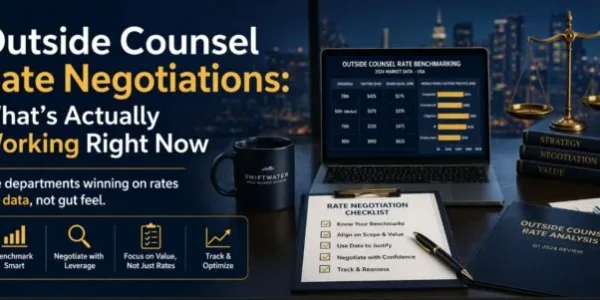
What Is Actually Working in Outside Counsel Rate Negotiations?
Most rate negotiations fail before they start. Not because firms push back but because in-house teams negotiate without data. Here is what is actually working.

How Do You Reduce Legal Spend Without Sacrificing Quality?
Reducing legal spend without sacrificing quality is not a trade-off problem. It is a management problem. Here are the levers that actually work.

What Are Matter Budgets and Why Don’t Departments Use Them?
Matter budgets are the single most effective legal spend control available to in-house teams. Most departments still do not use them. Here is why and how to change that.

Why Does Legal Spend Keep Creeping Up?
Legal spend creep is not primarily a law firm problem. It is an internal governance problem. Here is where the cost accumulates and how to stop it.

How Is Legal Spend Analytics Different From Reporting?
Most legal departments have reporting. Very few have analytics. Here is what the difference means in practice and why it determines whether you actually control costs.
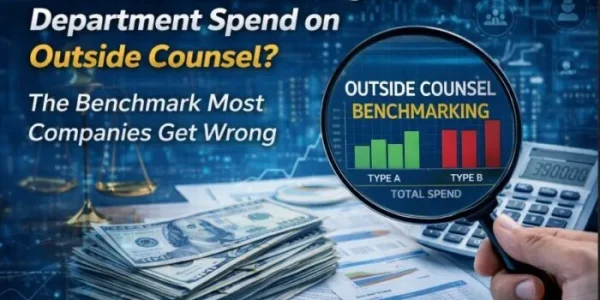
How Much Should a Legal Department Spend on Outside Counsel?
Most legal departments benchmark outside counsel spend the wrong way. Here is what the data actually shows and how to use benchmarks to make better decisions.

What Is a Legal Spend Baseline and How Do You Build One?
A legal spend baseline is the minimum foundation for any spend management program. Here is what it is, why most departments lack one, and how to build it in 30 days.
Why Do Outside Counsel Billing Guidelines Fail?
Most outside counsel billing guidelines fail not because they are poorly written but because they are never enforced. Here is why that happens and how to fix it.

What Should Every GC Know About Legal Spend?
Most General Counsel cannot answer five basic questions about their legal spend. Here is what that gap reveals and how to build the analytics capability to close it.

Why Legal Vendor Management Needs a Structured Approach
Legal vendor management needs a structured approach because speed and simplicity alone do not create control. It needs stronger systems, clearer governance, and better processes to manage vendors effectively.

Why Legal Spend Management Needs a Reboot
Despite business pressures, most legal departments hesitate to assign financial accountability to the attorneys who manage and direct the work.

Beyond Cost Cutting: How AI Is Reshaping Legal Spend Management
Industry experts share insights of AI's impact on law firm profitability, legal technology adoption, & the future of legal service delivery.

Legal Spend Management Tips to Cut Costs & Boost Efficiency
Discover essential legal spend management strategies to control costs and improve legal department performance. Optimize your legal spend today!