
Compliance risk management is the discipline of identifying where an organization is exposed to legal, regulatory, and policy failure, assessing how serious each exposure is, and putting controls in place to reduce it before it becomes an enforcement action, a financial loss, or a reputational event.
It comes down to four steps: find the risks, rank them, control them, then check whether those controls still hold. Every policy, training module, audit, and dashboard in a compliance program hangs off one of those four steps. A program that cannot say which step a given activity serves is usually running on habit.
The distinction that matters most is between a program that documents risk and one that reduces it. Documentation produces a register that satisfies an auditor. Reduction changes what the business actually does, which controls fire automatically, and how quickly a failure surfaces. Most programs that fail an enforcement test had documentation. What they lacked was evidence the controls were operating.
This guide covers what compliance risk is and what non-compliance actually costs, how to build the framework in four steps, how to move from periodic reviews to continuous monitoring, which controls and metrics show whether the program is working, and how a mature program comes to carry strategic weight.
What Is Compliance Risk Management and Why It Matters

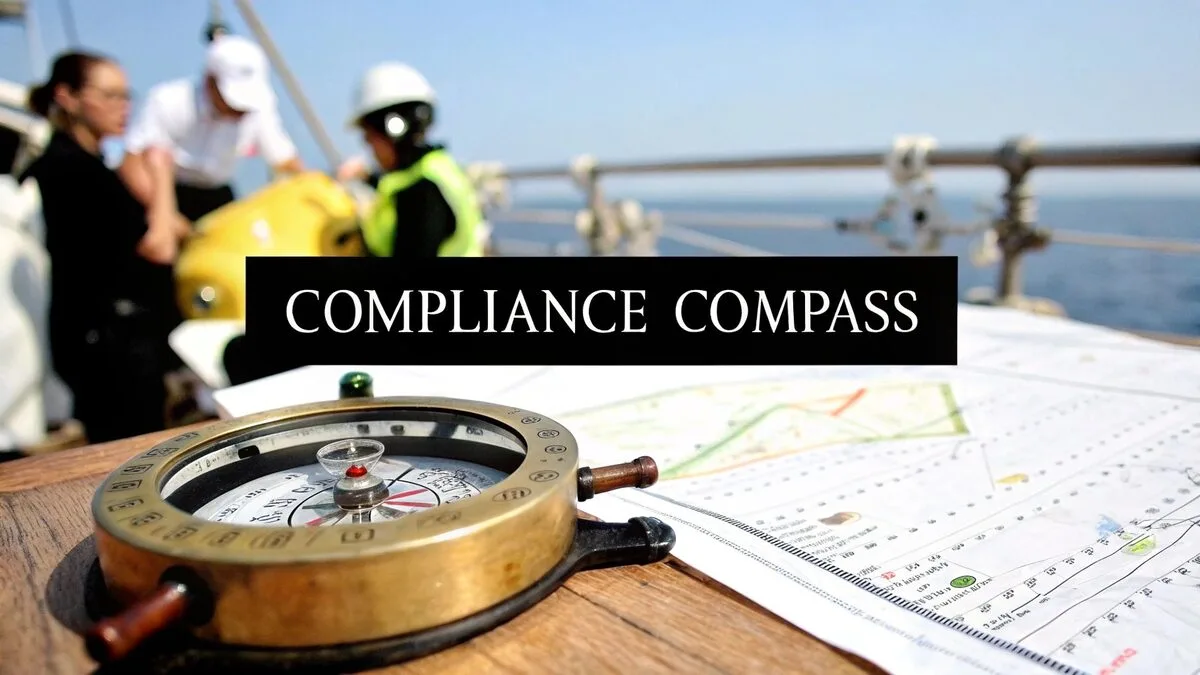
Let’s try an analogy. Imagine you’re the captain of a large ship navigating treacherous waters. The sea is littered with hidden reefs, constantly shifting sandbars, and unpredictable currents. These hazards represent the complex web of regulations, laws, and standards your business must navigate. No skilled captain would dare set sail without detailed nautical charts, a top-notch navigation system, and an alert crew.
In this story, compliance risk management is your entire navigation system. The regulations are the charts, your compliance program is the crew, and the framework you build is the technology that keeps you on course. Without it, you’re sailing blind, completely exposed to dangers that could sink your whole company.
Managing an internal investigation or regulatory matter?
Swiftwater supports legal and compliance teams with the operational infrastructure, vendor coordination, and program management that complex investigations demand.
See Risk SolutionsThe Value Beyond Penalties
Sure, preventing costly penalties is a huge motivator. But the real value of compliance risk management goes much deeper than just the financials. It’s a core strategic function that supports the health and longevity of your organization. A strong program actively protects and even enhances your most valuable asset: your reputation.
When customers, partners, and investors see you’re genuinely committed to ethical operations and following the rules, it builds a deep and lasting trust. That trust becomes a powerful competitive advantage. It makes it easier to attract top talent, keep loyal customers, and secure investment.
A proactive compliance posture creates value. It turns risk mitigation into a strategic enabler that supports sustainable growth and reinforces corporate integrity.
Ultimately, managing compliance risk is about building a resilient, trustworthy organization from the inside out. It shows a commitment to doing business the right way, creating a stable foundation for long-term success.
The Pillars of a Modern Program
To bring this idea down to earth, a modern compliance risk management program is built on several key pillars. Each one is a critical function, and they all work together to create a comprehensive defense system against regulatory and operational threats.
Understanding these components is the first step to building a program that’s both effective and efficient. The table below breaks down these essential pillars, explaining their purpose and giving a real-world example of each in action.
Key Pillars of a Modern Compliance Program
| Pillar | Description | Example Action |
|---|---|---|
| Governance & Leadership | Establishes top-down accountability and sets the ethical tone for the entire organization. | The Board of Directors regularly reviews and approves the corporate compliance policy and receives quarterly risk reports. |
| Risk Assessment | The process of systematically identifying, analyzing, and prioritizing potential compliance threats. | Conducting an annual risk assessment to identify new threats from updated data privacy laws like GDPR or CCPA. |
| Policies & Controls | Formal guidelines and specific actions designed to prevent or detect non-compliant activities. | Implementing a mandatory dual-approval process for all vendor payments exceeding a certain threshold to prevent fraud. |
| Training & Communication | Ensures all employees understand their compliance obligations and know how to report potential issues. | Requiring all new hires to complete an interactive training module on the company’s code of conduct and anti-bribery policy. |
| Monitoring & Auditing | Ongoing and periodic reviews to test the effectiveness of controls and ensure policies are being followed. | Performing quarterly audits of employee expense reports to check for compliance with the company’s travel and expense policy. |
| Issue Management | A clear process for investigating, documenting, and resolving reported compliance issues and breaches. | Using a centralized system to track whistleblower reports from intake and investigation through to resolution and remediation. |
Think of these pillars as the essential building blocks for your compliance “fortress.” Without any one of them, you leave a gap in your defenses that could be exploited. A truly robust program integrates all six, ensuring they support and reinforce each other.
Going Deeper with Internal Corporate Investigations
Not every compliance issue can be resolved through standard processes. When potential misconduct, fraud, or regulatory breaches surface, organizations need a trusted partner to conduct corporate investigations with rigor, discretion, and speed.
At Swiftwater, we’ve supported global companies through high-stakes investigations, whether initiated by whistleblower reports, regulatory inquiries, or internal audits. We help uncover root causes, assess exposure, and guide leadership through complex resolution processes with minimal disruption.
Our multidisciplinary approach combines legal, operational, and investigative expertise to deliver defensible findings and clear remediation steps. When the stakes are high, precision and confidentiality matter.
The Real Cost of Non-Compliance
It’s easy to fall into the trap of thinking compliance is just another administrative box to check. I’ve seen it happen. But that’s a dangerous mistake. When compliance risk isn’t managed properly, the fallout reaches well beyond regulatory fines. It’s a domino effect that can cripple a company financially and leave its reputation in tatters for years.
You don’t have to look far back in history for a painful reminder. The 2008 global financial crisis wasn’t a single error; it was a systemic meltdown of compliance. A cascade of failures in risk oversight and following the rules brought the world’s economy to its knees.
A Lesson from the 2008 Financial Crisis
At its core, the crisis was driven by financial institutions that simply ignored the fundamentals of compliance risk management. They got caught up in creating and trading incredibly complex financial products without having the right controls in place or even truly understanding the massive risks they were taking on.
It was a house of cards. When the market finally turned, the lack of transparency and shoddy risk management became painfully obvious to everyone. The result was a catastrophe. We saw major banks collapse and millions of people faced devastating economic hardship. That event completely reshaped the regulatory world for the next decade and beyond.
The 2008 crisis is a permanent reminder that compliance isn’t optional. It’s the very foundation of financial stability and public trust. When it’s missing, the consequences can be far-reaching and destructive.
This global disaster triggered a regulatory reckoning, leading to much stricter rules and a laser focus on solid oversight.
The Financial and Reputational Fallout
The fines for non-compliance can be eye-watering, but they’re often just the tip of the iceberg. The real cost is a mix of tangible and intangible damages that can cause lasting harm.
Building or maturing an enterprise risk program?
We work with legal and compliance leaders to design risk frameworks, governance structures, and reporting models that hold up under scrutiny.
See Risk Solutions- Direct Financial Penalties: This is the obvious one: fines from regulators, hefty legal fees, and the costs of settling lawsuits.
- Reputational Damage: This one stings. Losing customer trust is incredibly hard and expensive to win back. A tarnished brand means fleeing customers, trouble attracting new partners, and a shrinking market share.
- Operational Disruption: Investigations and cleanup efforts drain your internal resources. Suddenly, your team’s focus is pulled away from running the business and innovating.
- Decreased Market Value: For public companies, a major compliance failure almost always sends stock prices into a nosedive as investor confidence evaporates.
When Compliance Breakdowns Escalate
In high-impact compliance breaches, regulatory fines are just the beginning. Internal investigations become essential, both to address potential misconduct and to demonstrate accountability to regulators and restore stakeholder confidence.
Swiftwater supports clients during these moments of crisis, helping legal and compliance teams launch targeted corporate investigations that preserve evidence, protect privilege, and clarify root causes. Our goal is to help you act decisively, whether it’s to prepare for regulatory disclosure, defend corporate reputation, or implement systemic fixes.
These failures have had massive financial and reputational consequences across the globe. Take the banking sector, for instance. Following rules like Basel III means calculating Risk-Weighted Assets (RWA) and holding enough capital to absorb losses, a huge area for compliance risk. As we saw in 2008, getting this wrong can be catastrophic, which is why regulators now demand more transparency, stress testing, and capital. You can dive deeper into how capital estimation in financial management works to really grasp these mechanics.
At the end of the day, a strong compliance risk management program is your most critical insurance policy. It is the defense mechanism that protects your organization from a catastrophic failure, safeguarding its value, integrity, and future.
Swiftwater on running corporate investigations from intake through reporting.
Building Your Compliance Risk Management Framework
Now that we understand what’s at stake, it’s time to shift from theory to practice. Creating a solid compliance risk management framework means building a structured, repeatable process designed specifically for your organization’s unique risk profile, well beyond a generic template off the shelf.
Think of it like constructing a house. You need a solid foundation, a sturdy frame, and reliable systems to keep everything running safely. This framework is your blueprint for identifying, assessing, mitigating, and monitoring risks. It turns abstract compliance goals into concrete, actionable steps, giving everyone in the organization a clear path to follow. Without this structure, your efforts can easily become chaotic, reactive, and ultimately, ineffective.
Step 1: Identify Your Compliance Risks
You can’t manage a risk you don’t know exists. The first step is a deep-dive discovery process to map out your entire compliance universe. This means getting into every corner of your business to understand where potential regulatory, legal, and ethical obligations lie. And remember, this is an ongoing process that has to be revisited as the business changes.
Here are a few practical ways to start digging:
- Regulatory Monitoring: Actively track changes in laws, regulations, and industry standards that apply to your operations. This could be anything from new data privacy laws to updated environmental standards.
- Process Mapping: Take a close look at key business processes, like hiring, procurement, or sales, to find potential weak spots. Where could a policy be accidentally (or intentionally) violated?
- Internal Audits and Reviews: Regular internal check-ups are perfect for uncovering control gaps or discovering where people aren’t following existing policies.
- Stakeholder Interviews: Talk to the people on the front lines. Your employees, managers, and department heads often have the best insights into the day-to-day compliance challenges they face.
Getting this first phase right is absolutely critical. A shallow risk identification process will inevitably lead to a weak framework that leaves you exposed to major threats.
This can vary from industry to industry. In the Insurance industry it is common to keep an active repository of “50-state” surveys. In pharmaceutical, utilities and other heavily regulated industries there may be a set of regulatory agencies such as FDA, FERC, etc. that you need to keep an eye on.
Step 2: Assess and Prioritize Risks
Once you have your list of potential risks, you need to figure out which ones require your immediate attention. Not all risks are created equal. Risk assessment is all about analyzing two key factors for each risk you’ve identified: its likelihood of happening and its potential impact on the business if it does.
This assessment allows you to score and rank each risk, turning a long, overwhelming list into a prioritized action plan. A risk with a high likelihood and a high impact, like a major data breach of sensitive customer information, is going to jump to the top of your list. Meanwhile, a low-likelihood, low-impact risk, such as a minor administrative filing error, will fall much lower.
A well-executed risk assessment brings clarity to chaos. It transforms a daunting list of potential problems into a manageable set of priorities, allowing you to allocate your resources where they will have the greatest effect.
Step 3: Mitigate and Implement Controls
With your risks properly prioritized, it’s time to design and implement controls to deal with them. Mitigation is simply the action you take to reduce a risk’s likelihood or its potential impact. These controls are the practical safeguards that form the real backbone of your compliance program.
This is the stage where strategy becomes action. It’s where a compliance officer takes the plan and puts it into motion by implementing tangible security protocols and other key controls.
Step 4: Monitor, Report, and Refine
A compliance framework is a living, breathing system. It needs attention long after the document is written and filed. The final step is to build a continuous loop of monitoring, reporting, and refinement.
This involves regularly testing your controls to make sure they are actually working as intended. It also means generating reports for leadership to give them clear visibility into how the program is performing. The insights you gain from this entire process feed right back into your risk assessments, creating a powerful cycle of continuous improvement.
This ongoing cycle ensures your compliance risk management program stays relevant and effective, even as your business and the regulatory landscape evolve. This kind of diligent planning is also a core part of strategic business functions. To see how this aligns with broader departmental strategy, check out our guide on how to conduct effective legal department annual planning.
Building the legal operations function from scratch?
Assessment, roadmap, and delivery for the operational side of the department: spend, technology, process, vendors, and the data that proves what legal delivers. Advice from operators who ran the function.
See Legal Ops ConsultingThe right technology can make a huge difference here. A recent PwC study found that 64% of companies report better risk visibility thanks to technology, while 53% experience faster identification and proactive responses to issues. What’s more, 48% see higher-quality reporting and 43% achieve cost savings. Despite these clear benefits, only 7% of companies currently see themselves as compliance leaders, though 38% have their sights set on reaching that status in the next three years.
Shifting to a Continuous Compliance Model
Traditional compliance risk management has a fundamental problem: it’s almost always looking in the rearview mirror. Teams often work on a periodic schedule, running quarterly reviews or annual audits. This is a bit like only checking the engine after the car has already started making a strange noise. This reactive approach creates dangerous blind spots between assessments, leaving your business wide open to new threats.
There’s a much better way. The move to a continuous compliance model is like swapping out that occasional check-up for the live dashboard in a modern car. It doesn’t wait for a total breakdown to tell you something’s wrong. Instead, you get real-time alerts for low oil, tire pressure, or engine trouble, giving you the chance to fix issues before they spin out of control.
This proactive model weaves compliance monitoring directly into the fabric of your daily operations. It stops being a separate, dreaded event that happens a few times a year and becomes an always-on, automated part of how you do business. That shift changes the entire dynamic of how you oversee risk.
From Manual Reviews to Automated Monitoring
The biggest leap from periodic to continuous compliance comes down to technology and automation. Manual, interval-based reviews are slow, drain resources, and are riddled with potential for human error. They give you a snapshot in time, which is often outdated the moment it’s printed.
Automated, real-time control monitoring completely changes the game.
- Manual Approach: Imagine a compliance analyst manually pulling a sample of 50 expense reports each quarter to check for policy violations. This is a ton of work and only covers a tiny fraction of the actual transactions.
- Continuous Approach: Now, picture an automated system that analyzes 100% of expense reports in real time. It instantly flags any submission that breaks a policy threshold or uses suspicious keywords the second it hits the system.
This constant oversight doesn’t just catch problems faster. It frees up your compliance team to do more valuable work, like analyzing risk trends and actually improving the control environment itself.
The Business Case for Continuous Compliance
Adopting a continuous model is a smart business decision that delivers results well beyond better risk management. When compliance becomes a constant, low-friction process, it stops being a bottleneck and starts enabling the business to move faster.
This evolution is catching on. A massive 91% of companies are planning to implement continuous compliance within the next five years. Why? Because organizations report that a reactive compliance posture has had a negative impact on them. For instance, businesses without a continuous model say it slows down their sales cycles, showing a direct line between compliance friction and lost revenue.
A continuous compliance model transforms the function from a periodic police officer into a constant, trusted advisor. It helps the business move faster and more confidently by ensuring guardrails are always in place.
This approach builds incredible trust with partners and customers, who can see that your organization has a mature and reliable governance structure. It’s a powerful signal of operational excellence that can quickly become a competitive advantage.
Making the revenue case for compliance and investigations spend.
Making the Shift a Reality
Making this model a reality requires a smart strategy that brings together people, processes, and technology. The first step is to pinpoint your most critical controls, the ones that are perfect candidates for automation, and then find the right tools to monitor them effectively. This is about fundamentally rethinking how compliance plugs into your core business activities, well beyond buying software.
The goal is to create a powerful feedback loop. Automated monitoring provides a constant stream of data, which is then used to fine-tune your controls and policies. This virtuous cycle is what operational excellence is all about. For legal teams looking to drive these kinds of initiatives, understanding how to apply these principles is crucial. You can dive deeper into practical strategies in our guide on how the head of legal operations can implement continuous improvement.
By making this shift, organizations can build a resilient and agile compliance risk management program that is truly fit for the challenges of the modern world.
Key Controls and Metrics for Effective Oversight
A well-designed compliance risk management framework is nothing more than a document if you don’t have the right controls to bring it to life. Think of controls as the guardrails on a steep mountain road: they are the specific policies, actions, and procedures you put in place to keep your organization on the right path and prevent it from veering off a cliff. Without them, your framework is just a collection of good intentions.
But these controls do more than stop bad things from happening. They also create a transparent environment where you can actually measure performance, prove your program’s effectiveness to regulators, and build real confidence with your board and leadership team. They provide the hard evidence that your compliance program is working.
Preventative vs. Detective Controls
When we talk about controls, they generally fall into two buckets: preventative and detective. A truly robust compliance program needs a healthy mix of both. Preventative controls are proactive; they’re designed to stop a compliance issue before it can even happen. On the other hand, detective controls are reactive, designed to find problems that have already slipped through the cracks.
Imagine you’re securing a building. The locked doors, the security badges required for entry, and the mandatory background checks are all preventative controls. The security cameras monitoring the hallways and the guards doing regular patrols are detective controls. You wouldn’t rely on just one or the other. You need both for a truly secure environment.
The exact same principle applies to compliance. If you only rely on detective controls, you’re constantly playing catch-up and cleaning up messes. If you only use preventative controls, you’re flying blind, with no way of knowing if your defenses are actually working.
To really see how they work together, let’s put them side-by-side.
Preventative vs. Detective Compliance Controls
Building a balanced control environment means understanding the distinct roles that preventative and detective controls play. The following table breaks down their purpose and gives a few real-world examples.
| Control Type | Purpose | Example |
|---|---|---|
| Preventative | To stop non-compliant activities before they can happen. They are the first line of defense. | Requiring pre-approval from a manager for any expense over $500 to prevent policy violations. |
| Detective | To identify and report on non-compliant activities that have already occurred, allowing for correction. | Conducting a monthly audit of all expense reports to find transactions that violated the policy. |
| Preventative | To reduce the likelihood of a risk materializing by establishing clear rules and barriers. | Implementing mandatory cybersecurity training for all employees to reduce the risk of phishing attacks. |
| Detective | To uncover hidden issues and assess the effectiveness of preventative controls. | Performing regular vulnerability scans on the company network to identify unpatched systems. |
By strategically combining these controls, you create a layered defense that both minimizes the chance of issues and ensures you catch them quickly when they do occur.
Measuring What Matters with KPIs and KRIs
You can’t manage what you don’t measure. It’s an old saying, but it’s especially true in compliance. To know if your controls are actually effective, you have to track the right metrics. This is where Key Performance Indicators (KPIs) and Key Risk Indicators (KRIs) come into the picture.
- Key Performance Indicators (KPIs) track the health and performance of your compliance program. They tell you if you’re doing things right.
- Key Risk Indicators (KRIs) are forward-looking metrics that signal rising risk levels. Think of them as an early-warning system, alerting you to potential trouble on the horizon.
A KPI might track the percentage of employees who completed their annual training. A KRI, however, would track the increase in phishing simulation failures, signaling a growing risk of a real breach long before one happens.
This distinction is critical. KPIs are like a historical report card, telling you how you’ve done. KRIs are your forward-looking radar, showing you what’s coming. You need both for effective oversight, and they become particularly vital when managing cyber risk and its inherent legal frameworks.
Here are some practical examples of metrics you can start tracking:
- Percentage of employees completing annual compliance training on time. (KPI)
- Number of open audit findings past their due date. (KPI)
- Volume of compliance breaches identified per quarter. (KRI)
- Rate of increase in calls to the ethics hotline. (KRI)
- Time to close investigations into reported compliance issues. (KPI)
By tracking a balanced set of these metrics, you get out of the guessing game. You start operating with objective data that not only demonstrates the value of your compliance program but also helps you justify resources and make smarter, risk-informed decisions to protect the business.
Integrating Compliance for Strategic Advantage
For a long time, the compliance department was seen as the place where good ideas went to die. It was a cost center, a defensive shield, a necessary evil that just said “no.” But that view is becoming seriously outdated. A mature compliance risk management program is so much more than a way to dodge fines. When done right, it flips the script, turning from a pure cost center into a powerful engine for growth and a real strategic advantage.
When you weave compliance into the very fabric of the business, it stops being a roadblock. Instead, it becomes the guardrails that help the business confidently say “yes” to the right opportunities. It gives everyone, from IT and finance to HR and product development, the framework to make faster, smarter decisions without flying blind.
From Siloed Function to Connected Compliance
The most effective organizations I’ve seen practice what’s being called ‘connected compliance.’ It’s a simple but powerful idea: tear down the walls between the compliance team and the rest of the business units.
Think about it. When the compliance team works hand-in-hand with product development from day one, new offerings are built with regulations already in mind. This completely avoids those painful, expensive, last-minute redesigns.
At Swiftwater, we worked with a high-tech SaaS company that produces B2C software to launch an embedded “product compliance” process. It standardized & created accountability to product feature launches with compliance reviews built in. Due to a lack of standard tools that can handle the volume and complexity of the process we helped the client create a custom tool to handle the “embedded compliance”.
Likewise, when HR and compliance collaborate on hiring and training, you build a stronger ethical culture from the ground up. Compliance becomes a shared responsibility across the business, owned well beyond a handful of people in a back office.
This integrated approach is already delivering real results. One recent study found that 77% of organizations feel that compliance complexity is actually holding back their business growth. That pressure is pushing them to innovate. And of the companies that are embracing a connected approach, 59% report a huge boost in their decision-making confidence.
Building Trust as a Competitive Differentiator
In a market flooded with choices, trust is the ultimate currency. One of the best ways to earn and keep that trust is with a strong, transparent compliance program. It sends a clear signal to your clients, partners, and investors that your organization is stable, ethical, and built to last.
This trust delivers tangible business benefits:
- Stronger Client Relationships: In the B2B world especially, clients are putting their vendors’ compliance programs under the microscope. A solid program can be the one thing that tips a major contract in your favor.
- Attracting and Retaining Talent: Top performers want to work for ethical companies they can be proud of. A visible commitment to doing things the right way helps you attract and keep the kind of talent that shares your values.
- Enhanced Brand Equity: A clean compliance record is like a forcefield for your brand. It protects you from the reputational nightmares that can sink less diligent competitors, making your company the safer, more attractive choice.
When compliance is fully integrated, it stops being about just following a list of rules. It becomes a reflection of your company’s core values and its commitment to excellence. You’re building a more resilient and trustworthy business from the inside out.
Ultimately, a world-class compliance risk management program actively enables success. By embedding compliance into the DNA of your organization, you build a more efficient, trusted, and resilient company that’s truly set up for sustainable growth.
Bottom Line
The test of a compliance program is whether risk actually falls. The four steps are the whole discipline: identify where the organization is exposed, rank those exposures by likelihood and impact, put controls against the ones that matter, and monitor whether those controls are still operating. Everything else is implementation detail.
Three things separate programs that hold up from programs that only look complete. They run preventative and detective controls together, so a gap in one is caught by the other. They monitor continuously, which surfaces a failure in days instead of at the next quarterly review. And they measure whether risk actually fell, which is a harder number to produce than a training completion rate.
The strategic argument follows from the operational one. A program that can show its controls are working lets the business move faster, because the guardrails are known and trusted. A program that cannot is a brake, and it gets treated like one.
If you are standing one up, or inherited one that documents more than it reduces, start with the exposure map and the control inventory. Those two documents tell you almost everything about where a program actually stands.
This is the program work Swiftwater supports for legal, risk, and compliance teams. We help define the exposure map, build the control inventory, set the monitoring cadence, and stand up the reporting that shows leadership whether risk is actually falling. If you are building a compliance program, or repairing one that documents more than it reduces, our corporate investigations and strategic advisory services are where we start.
Frequently Asked Questions
What is compliance risk management?
Compliance risk management is the discipline of identifying where an organization is exposed to legal, regulatory, and policy failure, assessing how serious each exposure is, and applying controls that reduce it before it becomes an enforcement action, a financial loss, or a reputational event. It is a specialized part of enterprise risk management, focused specifically on the risks that arise from failing to follow laws, regulations, or internal policy.
What are the four steps in a compliance risk management framework?
The four steps are identify, assess, mitigate, and monitor. Identify means mapping where compliance obligations touch the business, including through process mapping across functions such as hiring, procurement, and sales. Assess means ranking each risk by likelihood and impact so attention goes to the exposures that matter. Mitigate means implementing the policies, procedures, and system controls that reduce those exposures. Monitor means testing whether the controls are still operating and refining them as regulations and the business change.
What is the difference between compliance and risk management?
Risk management is the broader discipline covering any threat to the business, whether financial, operational, or strategic. Compliance risk management addresses the narrower set of risks that come from failing to follow laws, regulations, or internal policies. All compliance risk is business risk, but most business risk is not compliance risk, which is why the compliance category usually warrants a dedicated program with its own owner and reporting line.
What is the difference between preventative and detective compliance controls?
Preventative controls stop a compliance failure from happening, such as approval thresholds, mandatory training before system access, or a workflow that blocks a transaction until a check clears. Detective controls identify a failure that has already occurred, such as transaction monitoring, audits, and exception reporting. Neither type is sufficient alone. Preventative controls can be bypassed and detective controls only work after the fact, so an effective program runs both against its highest-priority risks.
What is continuous compliance monitoring?
Continuous compliance monitoring replaces periodic manual review with automated, ongoing testing of whether controls are operating. Under a periodic model, a control can fail the day after a quarterly review and go unnoticed for months. Under a continuous model, the failure surfaces when it happens. The practical shift is to identify the controls most suited to automation, instrument those first, and route exceptions to an owner who can act on them.
Which metrics indicate whether a compliance program is working?
Useful programs separate key performance indicators, which measure whether compliance activity is being delivered, from key risk indicators, which measure whether exposure is actually changing. Training completion rates and policy attestation counts are performance measures. Rising exception volumes, repeat findings in the same process, and lengthening time to remediate are risk indicators. A program reporting only performance metrics can look healthy while its underlying risk position deteriorates.
Where should a smaller organization start building a compliance program?
Start with the one or two regulatory obligations that carry the most consequence for the business. Comprehensive coverage comes later. Identify which regulations genuinely apply, write a short policy describing how the organization meets each requirement, assign an owner, and train the people whose work touches it. That produces a defensible starting position and a foundation to extend. Spreadsheets are adequate at small scale, and the trigger to move on from them is transaction volume and process complexity.
How should a compliance team build the business case for investment?
Frame the request in the terms leadership already uses: risk exposure and financial consequence. Quantify what a failure in the specific area would cost, including remediation, legal fees, and business disruption, and show what the proposed investment changes about that exposure. The stronger case usually pairs the downside with the operational upside, because a program that can demonstrate working controls removes friction from sales cycles, procurement reviews, and partner diligence.
Disclaimer: This article is provided for educational and information purposes only. Neither Swiftwater and Company nor the author provides legal advice. External links reflect the thinking of their respective authors and are provided for informational purposes only.