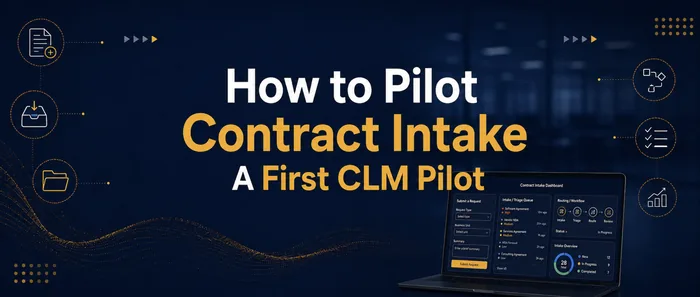

Pilot contract intake by choosing one or two contract types, standing up a single structured front door for them, and measuring the cycle time and visibility you gain before you expand to the rest.
Intake is the highest-leverage place to start, because it sits at the front of the lifecycle and fixing it produces visible results fast, whether you are proving value before selecting a platform or running phase one of a rollout you have already committed to.
Either way, intake is where a contract lifecycle management effort earns its first credibility.
This article covers why intake is the right pilot, how to scope it, and how to run it across your sell-side and buy-side platforms.
Why is intake the right place to start a CLM pilot?
Intake is the right place to start because it is the cheapest stage to fix and the fastest to show results, and because everything downstream depends on it. A contract that enters through a structured intake arrives with the right information, routed to the right owner, which removes friction from every stage that follows.
See the intake pilot scope table below for what to include in a first pilot and what to defer.
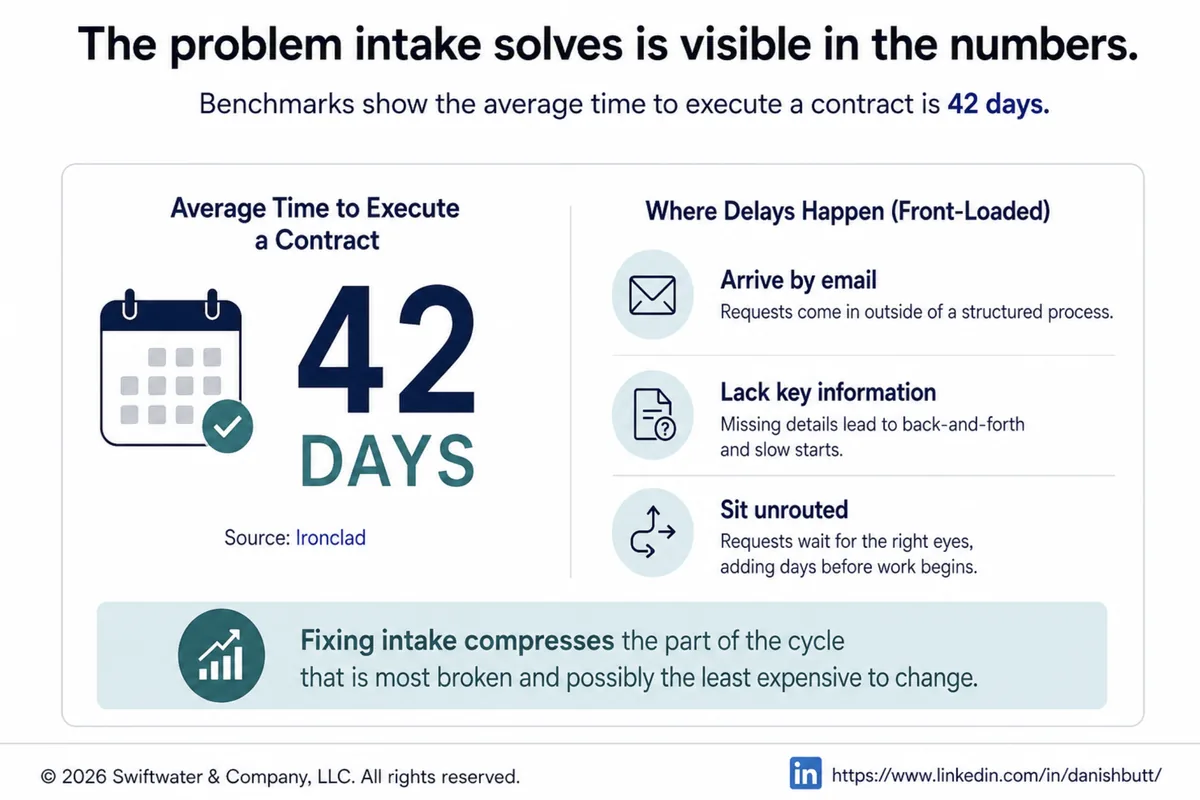
The problem intake solves is visible in the numbers. Ironclad’s 2025 benchmark put the average time to execute a contract at 42 days, and much of that delay is front-loaded, in requests that arrive by email, lack key information, or sit unrouted. Fixing intake compresses the part of the cycle that is most broken and least expensive to change.
Intake also produces the data that justifies the rest of the program. Once requests flow through one structured process, you can finally measure volume, type, and bottleneck, which is the evidence a platform owner needs to make the case for further investment. The downstream disciplines intake feeds are covered in Contract Workflow Management.
Not ready to pick a CLM platform yet?
A four to six week diagnostic that maps your current contract lifecycle, sets requirements themes, and tells you what to buy before you sit through another vendor demo.
See the CLM Discovery SprintShould you pilot intake before or after selecting a CLM?
You can do either, because a well-scoped intake pilot serves both paths, and the mechanics are nearly identical.
If you pilot before selecting a CLM, intake is your proof of value. You stand up a lightweight structured intake using tools you already own, measure the improvement, and carry that evidence and the requirements you learned into vendor selection. This is the lower-risk path for a platform owner who wants to validate the operating model before committing budget.
If you pilot as phase one of a chosen rollout, intake is your beachhead. You implement the new platform’s intake first, prove it with a contained group, and expand from a working foundation rather than launching the whole lifecycle at once. Either way you start at the same point, with one structured front door for one or two contract types, which is why the path you are on does not change how you scope the pilot.
How do you scope an intake pilot that proves value fast?
Scope an intake pilot narrow and deep: one or two contract types, one or two requesting groups, a single structured intake form, and clear routing to the right owner. Resist the urge to cover every contract type at once, because breadth is what turns a pilot into a stalled program.
The discipline is to defer everything that is not essential to proving the core hypothesis, that a structured front door reduces cycle time and increases visibility. Authoring, complex approvals, and deep integrations can wait. The pilot needs only enough to show that a request entering cleanly moves faster than one entering by email.
Choose contract types that are high in volume and low in complexity, because those give you the most learning for the least risk. NDAs and standard sell-side or buy-side agreements are common choices, since they recur often and follow a predictable path.
How do you pilot legal intake versus sell-side and buy-side intake?
Pilot each intake path where the request actually originates, because legal, sell-side, and buy-side requests start in different places and a single generic form serves none of them well.
Legal intake covers requests that come to the law department for review or drafting, and it is often the cleanest place to start a pilot because the volume is high and the pain is visible. A structured legal intake replaces the email-and-spreadsheet pattern most legal teams run, the same shift covered in automating legal service requests, and it gives the general counsel immediate visibility into what is coming in and where it stalls.
Sell-side intake originates in Salesforce, close to the opportunity, so the pilot has to capture requests where sales already works rather than asking them to leave the deal. Buy-side intake originates in ServiceNow for service and vendor requests and in procurement systems like SAP and Coupa for supplier agreements, so the pilot has to receive requests from those enterprise platforms with their context attached. Where each path should hand off to the CLM as the system of record is the subject of the Salesforce vs CLM vs ServiceNow boundary model.
How does intake connect to the wider operating model?
Intake connects to everything, because it is the point where contract data enters and where ownership is first assigned, which is why it sets the pattern for the entire lifecycle. A structured intake decides who owns a request, what system it lives in, and where it goes next, the same decisions that govern the whole operating model.
This is also where fragmentation starts or stops. WorldCC found contract data scattered across an average of 24 systems in larger organizations, and unstructured intake is how that sprawl begins, with each team capturing requests its own way. A single structured front door is the first correction. The role intake plays in the broader picture of who manages contracts is covered in what a contract manager does.
Intake is also where AI earns its first keep, triaging requests, classifying contract type, and flagging risk on the way in, as covered in AI contract review. Starting AI at intake means every downstream stage inherits cleaner, classified data. A structured front door also asks people to change how they work, which is why a pilot’s success depends as much on readiness and change management as on the form itself.
What should an intake pilot include and defer?
An intake pilot includes only what proves the core hypothesis and defers everything else to later phases.
Evaluating or implementing a CLM platform?
We have guided legal departments through selection, implementation, and adoption, without the vendor bias. Let us talk about where you are and what you actually need.
See CLM Services| In scope for the pilot | Deferred to a later phase | Why |
|---|---|---|
| One or two high-volume contract types | All remaining contract types | Breadth stalls pilots; depth proves the model |
| A single structured intake form | Complex conditional intake logic | Prove the front door works before refining it |
| Routing to the right owner | Multi-stage approval chains | Routing is the core of intake; approvals come later |
| Cycle time and volume metrics | Full portfolio analytics | You need proof, not a reporting suite, to start |
| One sell-side or buy-side originating system | All enterprise platforms at once | Validate one handoff cleanly before scaling |
| Basic AI triage and classification | Deep AI obligation extraction | Clean classified data at entry benefits every later stage |
The rule is simple: include what proves value, defer what adds scope. A pilot that tries to be complete is no longer a pilot.
Bottom Line
Intake is the right first CLM pilot because it is the cheapest stage to fix, the fastest to show results, and the foundation everything downstream depends on.
Pilot one structured front door for one or two contract types, prove the cycle-time and visibility gain, and you have both the evidence and the foundation for everything that follows.
Scoping and running an intake pilot is part of how Swiftwater turns a discovery sprint into action. We identify the contract types and originating systems that make the best first pilot across your sell-side and buy-side platforms, define what to include and what to defer, and set the metrics that prove value, whether you are validating before a purchase or launching phase one of a rollout. If you want a first move that produces visible results without committing the whole organization, a CLM discovery sprint identifies and scopes that pilot in four to six weeks.
Frequently asked questions
What is contract intake?
The process by which a contract request enters your organization, gets the right information attached, and is routed to the right owner. Structured intake replaces the email-and-spreadsheet pattern most teams run, and it is the front of the contract lifecycle.
Why start a CLM rollout with intake?
Because intake is the cheapest stage to fix and the fastest to show results, and everything downstream depends on it. A contract that enters cleanly moves faster through every later stage, which is why fixing intake compresses the most broken, least expensive part of the cycle.
Should you pilot intake before or after choosing a CLM?
Either works. Before selection, intake proves value and produces requirements you carry into the search. As phase one of a rollout, intake is the beachhead you expand from. The scoping is the same on both paths.
What should a contract intake pilot include?
One or two high-volume, low-complexity contract types, a single structured intake form, clear routing to the right owner, and cycle-time and volume metrics. Defer additional contract types, complex approvals, and deep integrations to later phases.
Where should legal, sell-side, and buy-side intake live?
Where each request originates. Legal intake replaces the law department’s email pattern with a structured form, sell-side intake captures requests in Salesforce where sales works, and buy-side intake receives requests from ServiceNow and procurement systems like SAP and Coupa. Each hands off to the CLM as the system of record.
This article is provided for general informational purposes and does not constitute legal advice. Contract intake and pilot decisions should be validated against your organization’s specific structure, regulatory obligations, and counsel guidance.