


The conversation around AI in legal has shifted from future possibility to present-day reality. While forward-thinking legal professionals are already leveraging artificial intelligence for a competitive edge, many teams lag, creating a significant performance gap. Adoption is happening, but it’s uneven, and overcoming internal resistance is the key to unlocking AI’s full potential.
Recent industry data highlights this disparity. A 2024 report found that while overall AI usage is growing, adoption rates vary dramatically. For instance, nearly 40% of in-house legal departments have adopted AI for contract management, compared to a much smaller percentage in traditional law firms. This gap underscores a central challenge: the promise of efficiency clashing with a culture of caution. This guide provides proven strategies to bridge that gap and successfully drive AI adoption in your legal team. For additional guidance on AI strategy, governance, implementation, and legal operations, visit Swiftwater’s Legal AI Resource Center.
The Resistance Problem: Why Lawyers Are Hesitant About AI
Despite the buzz around the efficiency gains from AI in legal tech, many methodical, evidence-driven lawyers remain hesitant. This isn’t just about being slow to adapt to new technology; the resistance is deeply rooted in the financial, structural, and ethical foundations of the legal profession. To get lawyers on board, you must first understand the “why” behind their caution. Resistance is not necessarily a technology problem. In many organizations it reflects uncertainty around workflows, accountability, and change management. Understanding these concerns creates the foundation for successful adoption programs that build trust while demonstrating measurable value.
Here are the primary reasons for hesitation:
- The Billable Hour Model: The traditional law firm business model rewards time spent, not efficiency gained. AI tools that can condense hours of work into minutes are perceived as a direct threat to this core revenue structure. Shifting this mindset is a major psychological and financial hurdle.
- Inherent Risk Aversion: Lawyers are trained to identify and mitigate risk. Introducing a new, sometimes opaque technology feels inherently risky. Concerns about accuracy, accountability, and professional liability arise immediately. Who is responsible if an AI tool makes a mistake or “hallucinates” a non-existent case precedent?
- Ethical and Confidentiality Concerns: The duty of confidentiality is paramount. Lawyers have valid fears about feeding sensitive client data into third-party AI systems, raising critical questions about data security, privacy, and potential algorithmic bias.
“The role of a good lawyer is as a ‘trusted advisor,’ not as a producer of documents… breadth of experience is where a lawyer’s true value lies and that will remain valuable.”
This sentiment captures the fear that technology could devalue the human judgment and expertise that define a great lawyer. Addressing these legitimate concerns head-on is the first step toward successful AI implementation.
5 Proven Strategies to Drive AI Adoption in Legal Teams
So you see the potential of AI, but how do you get your team on board? The secret isn’t a big, splashy rollout. It’s about building momentum for AI in legal work with a smart, phased approach. You want to get some early, tangible wins that turn the skeptics into your biggest supporters.
1. Start with Small, Low-Risk Use Cases
The journey begins not with a leap, but with a single, safe step. Forget trying to automate complex legal analysis from day one. Instead, focus on small, low-risk use cases where success is easily measured and the potential for error is minimal. Target repetitive, time-consuming tasks that are necessary but don’t require deep strategic thinking.
Thinking about AI but not sure what is actually ready to deploy?
Swiftwater's AI Lab helps legal departments separate signal from noise, identifying where AI creates real leverage and building the governance to use it responsibly.
See Legal AI SolutionsGreat starting points include:
- First-Pass Contract Review: Use AI to check standard agreements like NDAs or simple vendor contracts against your company’s playbook. The tool can quickly flag non-compliant language or missing clauses for human review.
- Legal Research: Deploy AI as a powerful legal assistant to summarize case law or surface relevant precedents, supercharging a lawyer’s research process rather than replacing their analysis.
- Reach out to the Swiftwater team for more use cases – especially, asking what works and what doesn’t
By focusing on these areas, you demonstrate immediate value safely. The goal is not to replace a lawyer’s final judgment but to give them back time and capacity. You can learn more about how to navigate these challenges by exploring the fundamentals of legal AI implementation. Before expanding pilots, many legal departments benefit from evaluating their operational readiness. A structured legal AI readiness assessment can help identify gaps in governance, data quality, workflow maturity, and adoption readiness before broader deployment.
2. Show Measurable ROI and Time Savings
To get buy-in from leadership and budget-holders, you must move beyond anecdotes and build a rock-solid business case with hard data. Lawyers respond to evidence, and financial leaders need to see a clear path to profitability.
Start by tracking time saved. If a new AI tool for document review cuts 100 associate-hours per month down to 25, you’ve freed up 75 hours. Translate that into a financial metric by multiplying the reclaimed hours by the associates’ blended hourly rate. Suddenly, an efficiency gain becomes a concrete cost-saving figure.
The most convincing arguments for AI are not about the technology itself, but about the business outcomes it enables. Frame every data point around its impact on cost, revenue, or risk.
This data-driven approach takes the emotion out of the discussion. It transforms the decision from a leap of faith into a sound financial move. When you prove that AI in legal is a profit center, not a cost center, adoption becomes an undeniable business imperative.
3. Involve Legal Champions Early
Every legal team has them—the lawyers and paralegals who are naturally curious about new tech. These are your most valuable allies. Identify them early and involve them in the pilot process from day one.
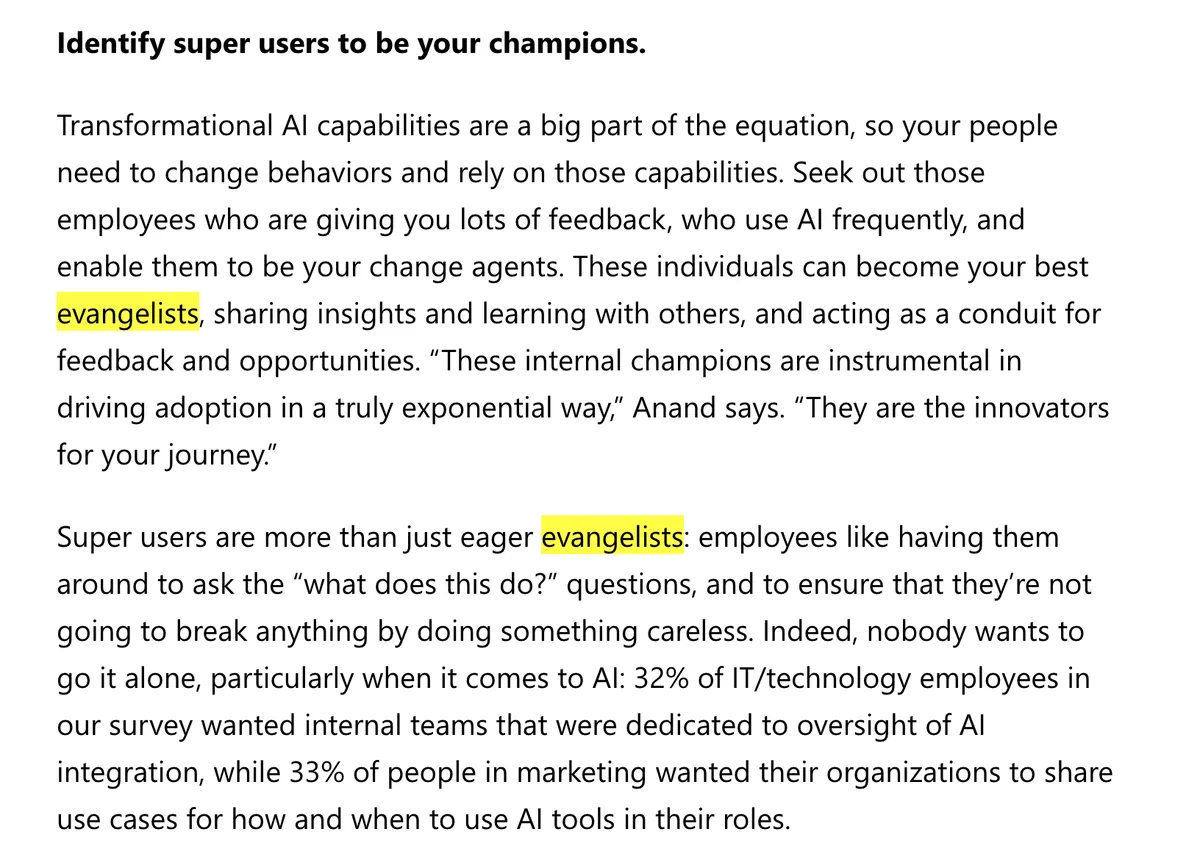
These individuals will become your internal champions. Their peer-to-peer feedback and genuine enthusiasm will do more to break down skepticism than any top-down directive. When a respected colleague says, “This tool saved me five hours this week,” it carries immense weight. Give them ownership in vendor selection and testing to ensure the tools solve real-world problems and fit into existing workflows. This focus on user-centric adoption is a core principle of effective legal workflow automation.
See this excerpt from a Microsoft article about how they have built in evangelist role in their AI roll-outs.
4. Provide Hands-On Training and Trust-Building Sessions
Fear often stems from the unknown. To build trust in AI, you must demystify it. Ditch boring lectures for hands-on, interactive training sessions where your team can see the tools in action on sanitized, hypothetical case files.
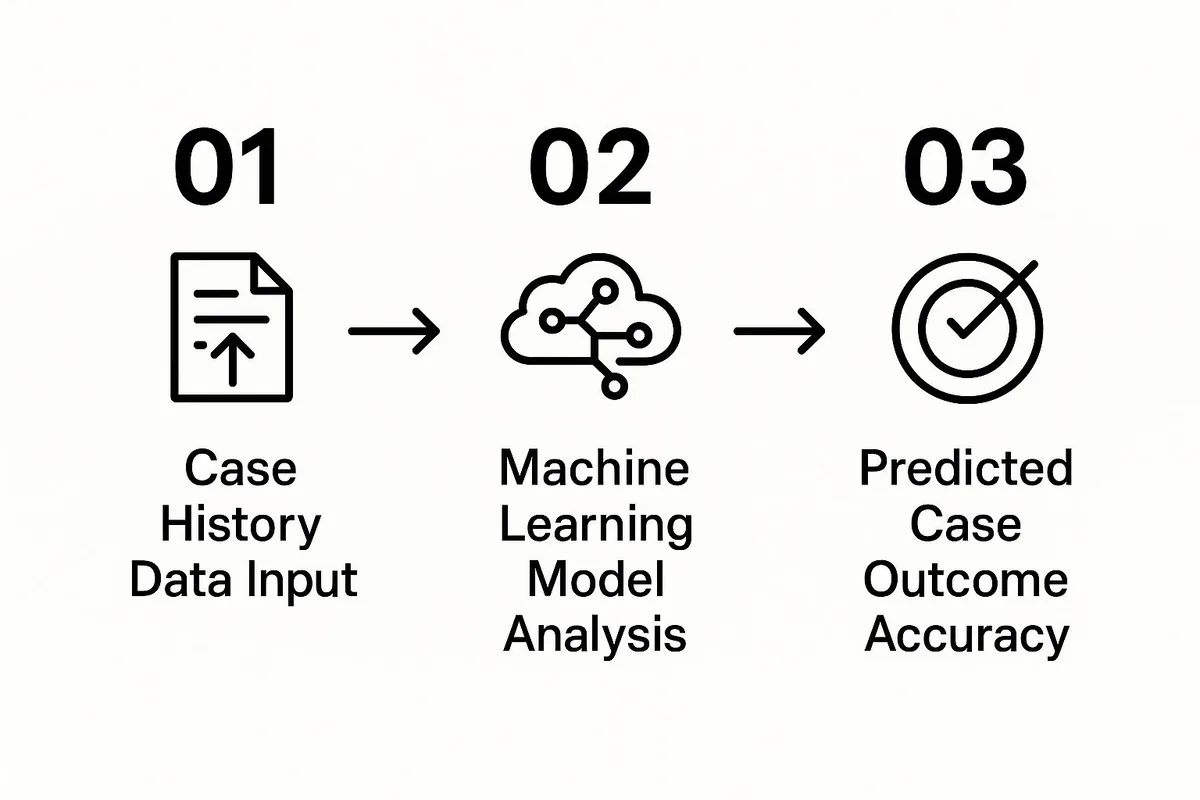
Let them run searches, review contracts, and ask the AI questions themselves. This direct experience builds confidence quickly, showing them the tool is a controllable assistant, not an uncontrollable black box. These sessions prove that AI in legal settings is about augmenting professional judgment, not replacing it, making the technology feel less like a threat and more like a powerful new tool.
5. Align AI Initiatives with Business Goals
Ultimately, the key to unlocking major investment is tying your AI initiatives directly to the company’s overarching goals. Frame every proposal in the context of business impact.
Evaluating legal technology but not sure where to start?
We help legal departments cut through the vendor noise, mapping technology to process maturity and building a roadmap that actually gets adopted.
See Legal Technology- Is the business focused on cost-cutting? Lead with data on how AI can reduce operational expenses and lower outside counsel spend through better legal spend management.
- Is the goal to accelerate growth? Show how an AI-powered contract review tool leads to faster deal velocity, directly supporting the sales team’s objectives.
When you align AI with strategic business priorities, it ceases to be a “legal tech” project and becomes a vital business initiative. As AI adoption expands, leadership teams should also establish clear governance expectations. A practical legal AI governance framework helps define accountability, approved use cases, oversight mechanisms, and risk management processes as adoption scales.
Case Studies: AI in Legal in Action
Theory and strategy are important, but seeing how AI in legal work plays out in the real world makes its value concrete. These brief examples illustrate how legal teams have successfully integrated AI to solve specific problems and achieve tangible results.
Mid-size Law Firm Uses AI as a Second Set of Eyes
I read a recent case study where a mid-size law firm focusing on healthcare technology law is using a contract review tool for its first pass. Their evaluation quotes mentioned the improvement in first pass review by making sure all important points were covered thereby elevating the value of their services. Similarly, having a pre-built AI template that was interactive acted a timesaver for referring to their best practices as well as prior used language.
In-House Team Gains Budget Clarity with E-Billing
An in-house legal team at a high-tech company faced spiraling outside counsel spend with little budget predictability. Manual invoice review was slow and ineffective. Their solution was an AI-driven e-billing analytics system paired with a traditional e-billing system that automatically audited every invoice against their billing guidelines, flagging out-of-policy charges. The change was profound. In addition to gaining the day-to-day visibility and better hygiene of their legal bills the analytics added an additional layer. The legal ops team gained a deeper view of spending. Our team worked with the legal ops leaders and the key business leaders to identify areas where staffing was mismatched.
We also looked at comparative benchmarks to see how similar work was being performed across firms to identify further opportunities of consolidation. With e-billing system, outside counsel guidelines and engagement letter frameworks we were able to save 20% the first year. The next year we identified a solid 10% additional savings with an opportunity of additional 10% as the department matured its monitoring and operations.
Many of these powerful AI tools rely on advanced Natural Language Processing (NLP) applications, allowing software to understand legal language and drive market expansion.
Conclusion: The Future is Now

The future of AI in legal is inevitable—teams that adopt it now will gain a significant competitive edge. Waiting is no longer a viable strategy; it’s a decision to fall behind. The firms and in-house departments acting today are not just buying software; they are building a durable advantage that will define their success for years to come.
By automating repetitive work, you empower your most talented people to focus on what truly matters: high-stakes strategic counsel, complex negotiations, and creative problem-solving. This shift leads to better business outcomes and a more attractive environment for top legal talent. Data from reports like the full 2025 Legal Industry Report confirms that AI proficiency is rapidly becoming a core competency.
The question is no longer if you should adopt AI, but how quickly you can integrate it to start delivering measurable value. The gap between the early movers and the laggards will only get wider from here.
The path forward begins with a single, deliberate step. Identify a clear pain point, launch a focused pilot project with internal champions, and measure the results. That one small win builds the confidence and the business case you need to scale your efforts. It’s time to move past hesitation and lead the way.
Ready to transform your operations using AI in legal and build a high-performing business function?
Evaluating or implementing a CLM platform?
We have guided legal departments through selection, implementation, and adoption, without the vendor bias. Let us talk about where you are and what you actually need.
See CLM ServicesNeed Help Accelerating Legal AI Adoption?
Successful adoption requires more than selecting the right technology. Legal departments must align governance, workflows, change management, and business objectives to achieve lasting results.
Learn how Swiftwater’s Legal AI Solutions help legal departments evaluate, implement, and scale AI responsibly.
Frequently Asked Questions
Why do some legal teams adopt AI faster than others?
Legal teams that adopt AI faster typically start with clearly defined use cases, establish governance early, and focus on solving practical workflow challenges. They also invest in training and create internal champions who help demonstrate value across the department.
What is the biggest factor influencing AI adoption in legal departments?
Trust is often the biggest factor. Lawyers are more likely to adopt AI when they understand how it works, where it adds value, and how human review remains part of the process. Confidence grows when teams can see measurable improvements in their daily work.
How can General Counsel build support for AI across the legal team?
General Counsel can build support by connecting AI initiatives to business objectives, sharing measurable results from pilot projects, involving respected team members early, and creating opportunities for hands-on experience with approved tools.
Should legal departments begin AI adoption with a department-wide rollout?
Most successful legal departments begin with focused pilot projects rather than large-scale deployments. Starting with a small group allows teams to validate outcomes, refine processes, gather feedback, and create internal success stories before broader adoption.
How do legal teams create internal AI champions?
AI champions often emerge from lawyers, legal operations professionals, and paralegals who are naturally interested in process improvement. Giving these individuals early access to tools, involving them in testing, and encouraging them to share results helps accelerate adoption across the department.
What role does training play in legal AI adoption?
Training helps legal professionals understand how AI fits into their workflows, improves confidence in using new tools, and establishes consistent practices across the team. Practical, hands-on training is often more effective than theoretical instruction alone.
How can legal departments sustain AI adoption after the initial rollout?
Sustained adoption comes from continuous measurement, ongoing training, workflow integration, leadership support, and regularly sharing examples of successful outcomes. When AI becomes part of standard operating procedures, usage becomes more consistent over time.
What does successful AI adoption look like in a legal department?
Successful adoption is reflected in consistent tool usage, faster turnaround times, improved visibility into legal work, measurable efficiency gains, stronger collaboration between legal and business teams, and increased capacity for attorneys to focus on strategic legal matters.
Disclamier: This article is provided for educational and informational purposes only. Neither Swiftwater and Company nor the author provides legal advice. This content does not constitute professional legal, financial, or operational advice and should not be relied upon as such. Readers are encouraged to consult a qualified professional before making decisions based on the information provided. External links are included for reference only and reflect the views of their respective authors. Swiftwater and Company takes no responsibility for third-party content.